GUIDE
I want to put my baby's photos in albums like the sticky-page ones my mom kept, but I've heard those pages ruin pictures. What kind of album should I buy?
By the seenow! teamLast updated:
Skip "magnetic" self-stick pages. Choose an album with paper pages and photo corners, or a ring binder with polyethylene or polypropylene sleeves, and look for materials that say they passed the Photographic Activity Test (PAT). Don't rely on the word "archival" alone; the National Archives notes it has no manufacturing standard.
WHY
Why this happens
The albums many of us grew up flipping through had pages coated with a tacky glue and a clear plastic sheet you pressed down over the photos. They were quick to fill, which is why so many families used them. Decades later, a lot of those pages have turned yellow, the plastic has gone cloudy, and the photos are stuck so firmly that they tear if you try to lift them. If you have seen your mom's albums in that state, it makes sense to hesitate before buying anything for your own baby's prints.
The National Archives' handout on preserving scrapbooks and photo albums names the reason directly: it advises avoiding albums with self-stick "magnetic" pages because of the adhesive on the mounting page. The same handout lists white glue, rubber cement, pressure-sensitive tapes, staples and hot glue as materials that do not age well and can damage or discolor photographs.
The tricky part is the shopping. Packages use words like "archival," "acid-free" and "photo safe," and they don't all mean the same thing. The handout warns that "archival" has no manufacturing standard. "Acid-free" means the material was pH-neutral when it was made, but all organic materials become acidic over time. The most useful label to look for is the Photographic Activity Test, a test that checks whether a storage material will cause photos to fade or stain.
| On the label | What it tells you |
|---|---|
| Self-stick or "magnetic" pages | Skip. The National Archives advises avoiding them because of the adhesive on the page. |
| Passed the Photographic Activity Test (PAT), ISO 18916 | The most useful sign. The test checks whether a material will make photos fade or stain. |
| Polyester, polyethylene or polypropylene sleeves | Stable plastics recommended for sleeves and album pages. |
| "Archival" | On its own, not enough. It has no manufacturing standard. |
| "Acid-free" | pH-neutral when made. Helpful, but not a guarantee for decades. |
| Unbuffered paper | Safe in contact with color photographs, which is what most phone prints are. |
Source: National Archives: Tips for Preserving Scrapbooks and Photo Albums (handout, 2021 Virtual Genealogy Fair) / Library of Congress Preservation: Photographs FAQ
HOW TO
What you can do starting today
Pick one of two album stylesNo app needed
The Library of Congress suggests two simple setups. One is a ring binder with polyethylene or polypropylene sleeves, where each print slides into a pocket and nothing touches glue. The other is an album with paper pages, where each print is held with photo corners. Sleeves are faster when you have hundreds of baby photos to place. Paper pages with corners leave room to write notes beside the pictures.
Check the package for the PAT, not just "archival"No app needed
Turn the box over and look for a line saying the pages, sleeves or corners passed the Photographic Activity Test. The National Archives notes that many manufacturers test their products this way and say so. If paper pages are involved, it also points to the ANSI/NISO Z39.48 standard for permanent paper. If you can't find either, a binder with plain polypropylene sleeves is a safe fallback.
Match the paper to color printsNo app needed
Prints from your phone are almost always color. The National Archives handout says unbuffered materials can be used with color photographs, while buffered paper is better suited to black-and-white photos and most papers. If you plan to slip a lock of hair, a hospital bracelet or a printed birth announcement in with the photos, give those their own sleeve so they don't press against the prints.
Label without ink on the frontNo app needed
Write dates and names on the album page or a sleeve's paper insert, not on the face of the photo. A soft pencil works on paper pages. Keep the finished album on a shelf inside the house, not in a garage or attic, where the National Archives handout says family items should not be stored.
WITH SEENOW!
Doing it with seenow!
seenow! is a family app for short videos, about 2 seconds a day, shared only with the people you invite. It has nothing to do with printing, but it can sit alongside an album.



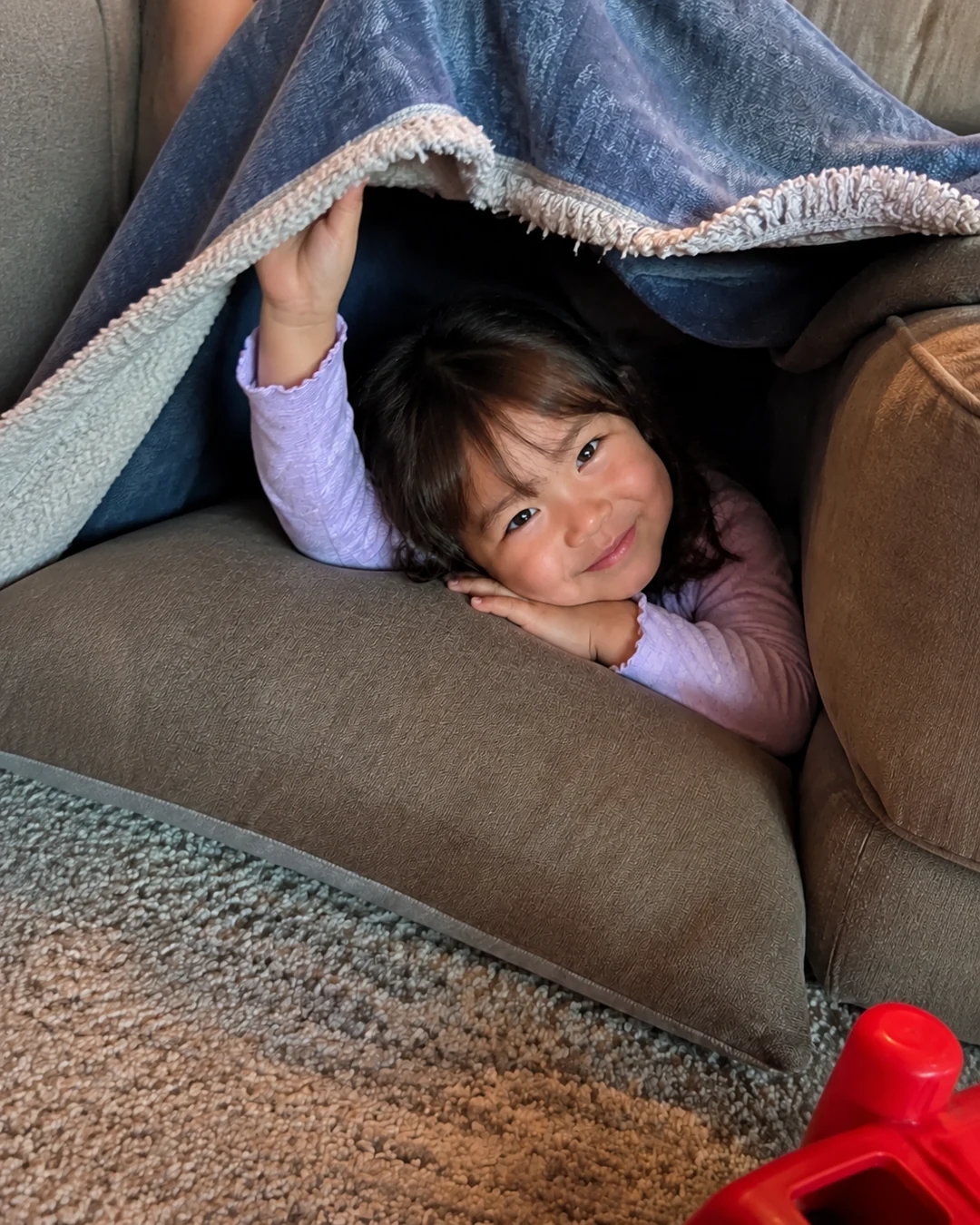
- The album holds the still moments. Short clips of the same months, like her first laugh or first wobbly crawl, can be taken with seenow! and shared with the grandparents in a private group, so the sounds and movement are kept too.
What seenow! can’t do
- seenow! does not make albums, prints or photo books, and it cannot post photos already in your camera roll. Only photos and videos taken with the seenow! camera can be posted.
Core features are free.
POINT
Things to watch for in this situation
If you want to save your mom's albums too
Don't force photos off old sticky pages. The Library of Congress says that if a photo is stuck, the safest option is to cut around it while it is still attached to the page, as long as nothing is on the other side, and that a thin card slid behind the photo may help only if the adhesive has completely dried out. For anything that won't release, ask a photograph conservator.
Leave a little room in each album
The National Archives advises against overstuffing albums. A baby's first year fills pages quickly, so plan on more than one binder rather than squeezing extra sleeves into one.
FAQ
Frequently asked questions
Are magnetic photo albums bad for photos?
Preservation guidance from the National Archives advises avoiding them, because of the adhesive on the self-stick pages. Over time it can discolor prints and make them hard to remove without damage.
Is acid-free enough?
It helps, but it is only part of the picture. Acid-free means the material was pH-neutral when it was made. Look for products that also say they passed the Photographic Activity Test.