GUIDE
Every summer I drive my 3- and 7-year-old more than 1,000 miles to my parents' house in two days. How do I plan the drive and the overnight stop better than last year?
By the seenow! teamLast updated:
Plan it as two days with a real stop in the middle, not one long drive broken by a hotel. Map each day with its stops before you leave, download offline maps for the route, and pick an overnight town where the kids get an evening to move, like a pool or a park.
WHY
Why this happens
More than 1,000 miles in two days means roughly 500 miles or more each day, with one adult driving and two kids who need very different things. Your 3-year-old needs to nap and to run. Your 7-year-old is old enough to be bored, to ask "how much longer?" and to fight over the tablet. A plan that works for one often frustrates the other.
The overnight stop is usually where last year went wrong. If it is only a bed near the highway, the kids arrive after a whole day buckled in and have nowhere to let the energy out, and you start day two tired. In parent forum threads about drives like this, a common suggestion is to make the stop a small destination of its own: a motel with a pool, a campground with a playground, a park the kids can look forward to.
The tools you probably already use can do more of the planning than you might think, as long as you set them up before you leave.
| Feature | What the help pages say |
|---|---|
| Multiple stops | Up to 9 stops, including the final destination (not for transit or flights) |
| Depart-at / arrive-by times | Only for routes with one destination |
| Offline maps (Android) | Guide you only if the entire route is inside the downloaded area; no traffic info or alternate routes |
| Keeping offline maps current | Downloaded maps must be updated before they expire |
Source: Google Maps Help: Get directions and show routes / Google Maps Help (Android): Download areas and navigate offline
HOW TO
What you can do starting today
Choose the overnight town for the kids, not the exact halfway pointNo app needed
Look at the towns within reach of the midpoint and pick the one with the best evening for the kids, even if it makes day one a little longer or shorter. A pool, a playground, a short walk by a river or a lake: something the 7-year-old can count down to and the 3-year-old can run around in. Book it before the trip so you're not searching at dinnertime.
Map each day as its own route, with planned stopsNo app needed
Instead of one route from home to Grandma's, build two: home to the overnight town, and the overnight town to your parents' house. Google Maps lets you add up to 9 stops on a driving route, counting the destination, so you can put each day's gas, lunch and play stops in before you go. Departure and arrival time estimates only work for single-destination routes, so check those leg by leg.
Download offline maps for both daysNo app needed
Long interstate stretches can have weak signal. On Android, download offline maps that cover the whole route, because offline navigation only works if the entire route is inside the downloaded area. Offline, you lose traffic and alternate routes, so check traffic whenever you have signal. Update the maps the week before you leave so they don't expire mid-trip.
Source: Google Maps Help (Android): Download areas and navigate offline
Make one stop worth getting out of the car forNo app needed
Look for a National Park Service site near your route. There are more than 400 across the country, and most have a Junior Ranger program: ask at the visitor center, and kids work through activities, often in a free booklet, then earn a badge or similar keepsake. Badges are mostly given in person, so it is a souvenir only the trip can bring. Even a short visit breaks up the day better than another gas station.
Give the kids jobs, including keeping Grandma posted
Your 7-year-old can be the navigator who checks off each stop on a paper list. Your 3-year-old can choose the snack at each stop. At every stop, take a few seconds of video of the kids for your parents, so they can see how far you've come and when to expect you.
WITH SEENOW!
Doing it with seenow!
seenow! is a private family app where each person posts a short clip, about 2 seconds a day. It fits the last step: letting the grandparents follow the trip without calls while you drive.
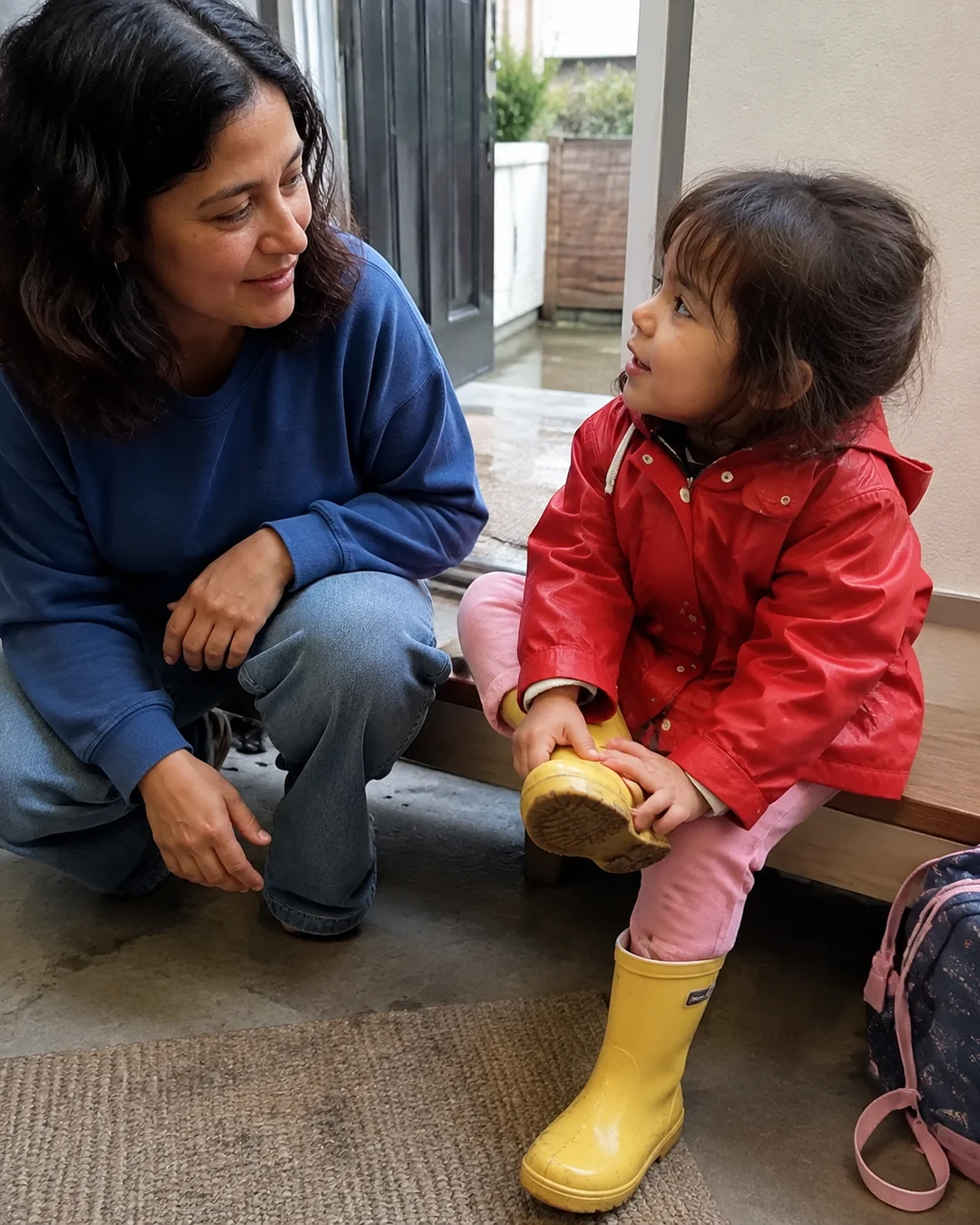



- At a stop, post a 2-second clip of the kids at the pool or the visitor center. Your parents get a notification and see where you are in the trip, without you having to type an update.
- Once you arrive, everyone keeps posting from Grandma's house, and each week seenow! makes a recap video from the clips automatically, so the summer has a record from the first mile.
What seenow! can’t do
- seenow! has no maps, location sharing or navigation. Plan the route and stops in your maps app.
- Only post at stops. Never film or use the app while you are driving.
Core features are free.
POINT
Things to watch for in this situation
Keep day two flexible
Don't promise the grandparents an arrival time for day two before you leave. Tell them the morning you set out, once you know how the night went, and update them at your last stop.
Pack the overnight bag separately
Put pajamas, toothbrushes, swimsuits and tomorrow's clothes for all three of you in one small bag, so you don't have to unload the whole car at the motel.
FAQ
Frequently asked questions
Where should we stop overnight on a two-day drive with kids?
Near the midpoint, but choose the town for the kids' evening, not the exact mileage: a place with a pool, a park or a campground playground. Book it before you leave.
Should the grandparents meet us partway?
If they're able and willing, meeting at the overnight stop or for the last leg can make day two easier and gives the kids a happy reunion before you arrive. Plan it with them well before the trip.
Can Google Maps plan a route with several stops?
Yes. Google Maps lets you add up to 9 stops on a driving route, including the final destination. Arrival-time options work only for single-destination routes, so plan each day as its own route.